
Nyerere National Park
Nyerere National Park: Tanzania’s Untamed Wilderness
Nyerere National Park, formerly known as Selous Game Reserve, is recognized as one of Africa’s largest and most untouched wilderness areas. More than 30,000 square kilometers are spanned by the park in southern Tanzania. In addition, the park was named after Julius Nyerere, Tanzania’s first president. Today, it is widely known for its vast landscapes, rich biodiversity, and remote safari experience.
History and Transformation
The park was officially established in 2019. It was carved out of the larger Selous Game Reserve so that conservation could be strengthened and tourism management improved. Originally, the Selous Game Reserve was founded in 1922. UNESCO World Heritage status was later gained by the reserve due to its ecological importance.
Furthermore, Julius Nyerere is honored by the renaming of the park. A major role was played by him in promoting conservation and national identity. As a result, both natural heritage and historical legacy are now represented by the park.
Key Features and Attractions
Diverse Wildlife
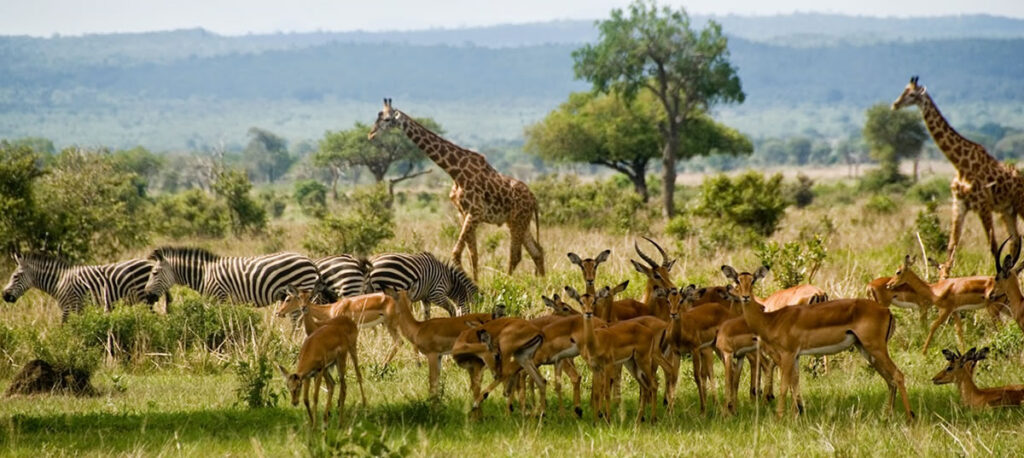
An impressive range of wildlife is hosted by Nyerere National Park. The Big Five—lions, leopards, elephants, rhinos, and buffaloes—are included in this habitat. Additionally, large populations of hippos and crocodiles can be found in the rivers and lakes.
Rare species such as the African wild dog are also protected here. Because of the park’s size, different habitats are moved through freely by the animals. Excellent and varied game viewing opportunities are created by this freedom of movement.
Rufiji River Ecosystem
The heart of the park is flowed through by the Rufiji River. Lakes, channels, and wetlands are formed by the river to support rich wildlife life.
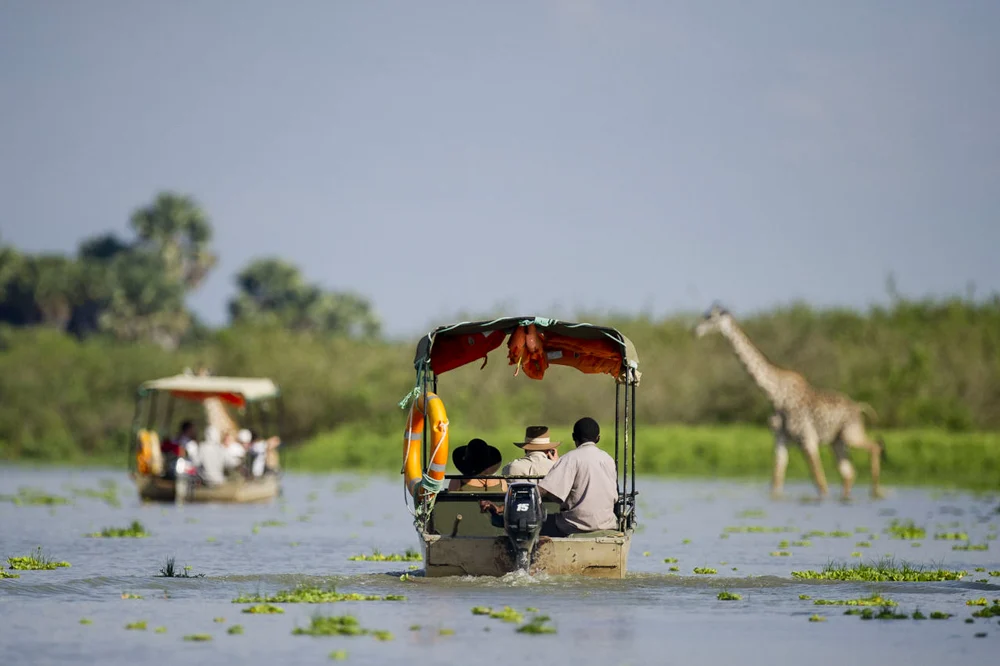
Moreover, a different safari experience is offered by boat safaris along the river. Hippos, crocodiles, and water birds can be seen at close range by visitors. Therefore, the river is considered one of the park’s most important highlights.
Stiegler’s Gorge
Stiegler’s Gorge is a dramatic canyon carved by the Rufiji River. It features steep cliffs that rise over 100 meters. Consequently, conservation efforts remain very important in this area.
Landscapes and Ecosystems
A mix of miombo woodlands, savannahs, and riverine forests is contained within the park. A wide range of plant and animal life is supported by these habitats.
In addition, different safari experiences are offered in every direction by the changing landscapes. Wildlife viewing is varied depending on location and season, by which every visit is kept unique.
Natural Hot Springs
Natural hot springs are also found within the park boundaries. Warm, mineral-rich waters are provided by these springs, which are believed to be therapeutic. As a result, a relaxing break is offered to visitors during safari adventures in the wild.
Activities in Nyerere National Park
Game Drives: Vast wilderness areas are explored during game drives. Sightings of elephants, lions, and other wildlife are commonly experienced by travelers.
Boat Safaris: Close encounters with hippos, crocodiles, and numerous bird species are provided by boat safaris along the Rufiji River.
Walking Safaris: A more intimate experience is offered by walking safaris. Tracks, plants, and smaller wildlife—which are often missed from vehicles—are learned about with the assistance of a guide.
Bird Watching: More than 440 bird species have been recorded in the park. Therefore, it is considered a paradise for bird lovers. River areas are dominated by waterbirds, while woodland species are found deeper in the miombo forests.
Cultural Experiences: Visitors are introduced to local communities near the park through cultural tours. Traditions, lifestyles, and conservation awareness are learned about by travelers during these visits.
Best Time to Visit
June to October
The dry season is considered the best time for wildlife viewing. Animals are gathered near water sources, making them easier to spot. In addition, more comfortable travel conditions are brought by this season.
November to March
Lush landscapes and vibrant scenery are brought by the green season. Although animals are more scattered, excellent birdwatching is enjoyed during this time.
April to May
Heavy rains are experienced during this period. As a result, some areas may be rendered difficult to access. However, very green and dramatic scenery is produced by the rainfall.
Conservation and Sustainability
A major role is played by Nyerere National Park in Tanzania’s conservation efforts. Anti-poaching programs are actively implemented across the park, and habitat restoration projects are continued to protect biodiversity.
Local communities are also involved in tourism activities. Therefore, conservation and livelihoods are closely connected. Awareness and long-term protection of natural resources are further supported by education programs.
Conclusion
A rare and authentic safari experience is offered by Nyerere National Park. Vast wilderness, rich wildlife, and unique river ecosystems are combined within its borders. Ultimately, every visit feels remote, peaceful, and unforgettable. As a result, it remains celebrated as one of Tanzania’s most remarkable safari destinations.

FAQ
Most frequent questions and answers
Nyerere National Park is located in southern Tanzania, covering a vast area that includes parts of the Liwale District in Lindi Region, southwest Pwani Region, northeastern Ruvuma Region, and southeastern Morogoro Region
What is the best time to visit Nyerere National Park?
You can see a variety of wildlife, including elephants, lions, cheetahs, African wild dogs, hippos, crocodiles, and over 440 species of birds. The park is also home to the “Big Five” (lion, leopard, elephant, buffalo, and rhino)
Yes, most visitors need a visa to enter Tanzania. You can apply for an e-visa online
Yes, Nyerere National Park is generally safe for visitors. However, it’s important to follow park guidelines and respect the wildlife.
Activities include game drives, boat safaris, walking safaris, bird watching, and cultural tours. The park also offers opportunities to see the Rufiji River and its diverse wildlife.
A stay of at least 3-4 days is recommended to fully experience the park’s wildlife and landscapes
You can reach Nyerere National Park by road from Dar es Salaam, which takes around 5 hours. There are also daily scheduled flights from Dar es Salaam to the park’s airstrips.